
There are experiences I can explain. And there are experiences I can only describe.
Learning about high sensitivity gave me language for many things I had experienced for years. It helped me understand why certain environments overwhelm me, why I notice subtle changes around me, and why my body sometimes seems to respond before I consciously understand what has caught my attention.
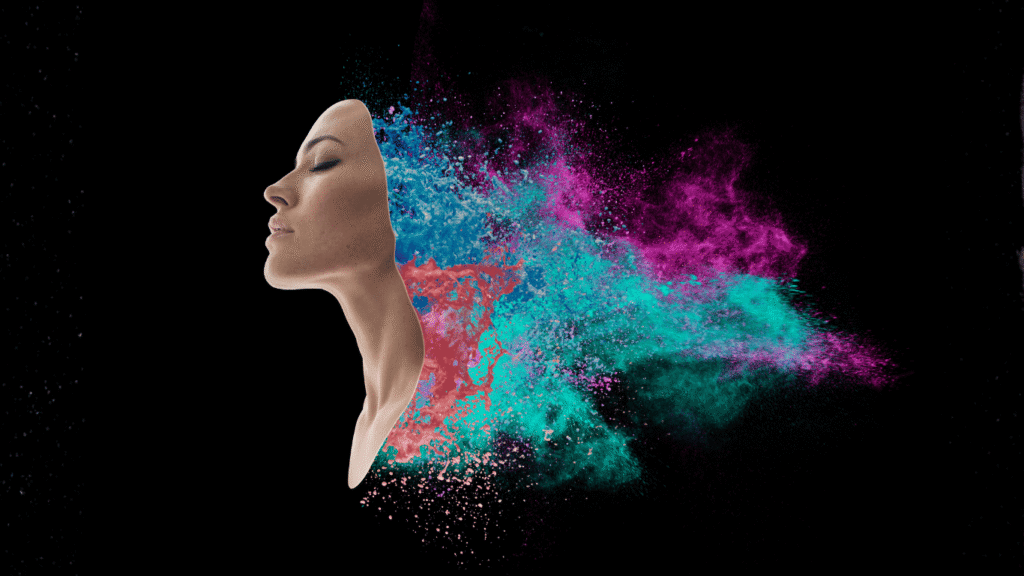
But deeper I explored my sensitivity, the more I realised that not everything I experience fits neatly inside that explanation.
There is another part of my life that has been there for as long as I can remember.
My spirituality.
And somewhere between psychology and spirituality is a space I have learned not to fell too quickly with answers.
When Silence Doesn’t Feel Empty
Silence has always been important to me.
I think of it as my sanctuary.
When I am surrounded by noise, activity and competing demands, my attention can eventually become overloaded. But when I enter a quiet environment, particularly somewhere in nature, something very different happens.
I don’t necessarily experience less.
Sometimes I experience more.
I notice the surroundings. I become still. The experience can become vivid and intense, but not in the way a crowded environment feels intense.
There is coherence to it.
I feel calm, reassured and safe. At times, the experience feels sacred.
Music and art can affect me in a similar way. They can create an internal stillness that isn’t really empty at all. It feels full of something I cannot always put into words.
Psychology can help me understand why a sensitive person may respond strongly to an environment.
But when I call an experience sacred, I have already moved beyond describing what happened.
I am describing what it meant to me.
That difference matters.
What Did I Experience, and What Did I Make It Mean?
This has become one of the most useful questions in understanding myself.
Sometimes something happens internally before I have an explanation for it.
Physical sensation.
A sudden feeling.
A change in attention.
An impression about someone or something happening around me.
For much of my life, these experience felt immediate. Something in me noticed, and then my mind tried to understand what had been noticed.
As I become more reflective about this process, I realised there are several layers happening very close toghether.
There is the experience itself.
There is what I observe.
There is my interpretation of what I observed.
And then there is the meaning I give to it.
They can happen so quickly that they feel like one thing. But they are not necessarily the same.
The distinction became particularly important when I began thinking about intuition.
Intuition Lives in an Interesting Middle Ground
I have always paid close attention to people.
Words matter to me, but so do tone, expression, body language and the feeling I experience while interacting with someone.
Sometimes I have an impression before I can explain why.
Psychology offers useful possibilities for understanding this.
The human brain is constantly processing information outside deliberate conscious awareness. We recognise patterns, compare present experiences with previous ones and respond to subtle social and environmental information before we necessarily have words for what we have noticed.
So something that feels immediate or intuitive may sometimes reflect information we have already processed without consciously tracing every step.
That explanation makes sense to me. But it also taught me something important.
Feeling something strongly does not automatically tell me what caused the feeling.
An internal signal could be connected to something I genuinely noticed.
It could also be influenced by memory, expectation, emotion, fear or previous experience.
This is why I have become more interested in discernment than certainty.
Instead of immediately asking: Is my intuition right?
I find it more useful to ask: What is this feeling asking me to notice?
Then I can observe. I can question. I can wait.
And sometimes I can simply admit that I don’t know.
Then There Are Experiences Psychology Cannot Fully Interpret for Me
Psychology can offer explanations for perception, attention, emotion, bodily awareness, memory and pattern recognition.
Those explanations are valuable. I want them.
Understanding how the mind and body work doesn’t diminish the importance of an experience for me.
But psychology cannot necessarily answer another question: What should this experience mean in my life?
That is where my spirituality enters.
I believe in God.
I experience my relationship with God as personal rather than purely intellectual. There have also been experiences throughout my life that I understand through a spiritual lens.
Some have brought reassurance.
Some have made me stop and pay attention.
Others have remained difficult to understand.
I don’t feel a need to force all of them into psychological language.
But neither do I feel a need to turn every unexplained experience into proof of something supernatural.
There is another possibility.
I can remain curious.

I Don’t Need Psychology and Spirituality to Compete
For a long time, people have approached questions of human experience as though we must choose a side.
Either something has a psychological explanation or it is spiritual.
Either we analyse it or we believe it.
Either we question it or we trust it.
My own experience has made that division increasingly uncomfortable.
Why must understanding the psychological process remove personal meaning?
If music moves me deeply, knowing something about how the brain processes music doesn’t make the experience less beautiful.
If nature brings me peace, understanding my nervous system doesn’t make the peace less real.
Likewise, examining an intuitive feeling does not require me to dismiss it.
Questioning an interpretation does not mean rejecting my spirituality.
I can ask: What might be happening psychologically?
And still ask: What does this mean to me spiritually?
Those questions are doing different work.
Sensitivity and Spirituality Are Not the Same Thing
This is a distinction I want to make clearly.
Being highly sensitive does not automatically make someone spiritually gifted.
It does not prove that intuition is correct.
It does not mean that unusual internal experiences originate from somewhere outside ourselves.
And spirituality is certainly not exclusive to highly sensitive people.
For me, sensitivity and spirituality simply intersect.
Sensitivity affects how I encounter the world.
It influences what captures my attention, what overwhelms me, what moves me and what I experience deeply.
Spirituality influences how I understand some of those experiences and the meaning I give them.
One may shape the experience. The other may help me interpret its significance.
Sometimes the boundary between them is clear. Sometimes it isn’t.
I have become comfortable allowing that boundary to remain uncertain.
Mystery Does Not Require Certainty
Perhaps one of the most difficult things for an analytical mind is leaving something unexplained.
I naturally want to understand.
I observe.
I analyse.
I look for patterns.
If something unusual happens, I want to know why.
But some experiences refuse to become neat conclusions.
Was it intuition?
Pattern recognition?
Emotion?
Coincidence?
Something Spiritual?
Perhaps sometimes I will know…Perhaps sometimes I won’t.
I used to think uncertainty meant I had not looked deeply enough.
Now I see another possibility.
Sometimes uncertainty may simply be the most accurate answer available. That does not make an experience meaningless.
Something can be personally significant without becoming an objective claim about how reality works.
I can say:
This happened to me.
This is what I experienced.
This is how I understood it.
And still leave a room for:
I don’t know exactly what caused it.
There is something freeing about that.

Discernment Gives Mystery Somewhere to Stand
The more I understand my sensitivity, the less interested I become in proving every internal experience to other people.
I am more interested in understanding my relationship with it.
Does this feeling require action?
Does it simply require attention?
Am I observing something in the present, or reacting to something from my past?
What evidence do I have?
What am I assuming?
What meaning am I adding?
And perhaps most importantly:
Can I allow an experience to matter without needing to make it certain?
For me, that is where discernment sits.
Not between belief and disbelief… Between experience and conclusion.
It allows me to respect what I feel without becoming controlled by every feeling.
It allows me to value intuition without treating intuition is infallible.
And it allows me to hold spirituality deeply without requiring other people to interpret my experiences the same way I do.
Where Psychology Ends
Perhaps psychology doesn’t really “end” at a particular point.
It can continue asking questions about perception, cognition, emotion, memory, the nervous system and human behaviour.
And I want those questions.
But there is a point where scientific description and personal meaning become different conversations.
Psychology may help me understand how I experience something.
It cannot decide for me what is sacred.
It cannot tell me what an experience should mean within my relationship with God.
And spirituality cannot replace psychological understanding when psychological understanding is useful.
I don’t need either one to do the other’s job.
There is room for both.
Between them is a space I once might have rushed to explain.
Now I am more willing to stand there.
To observe.
To question.
To feel.
to learn.
And sometimes, simply to leave something unexplained.
Not everything meaningful needs to become certainty.
Sometimes understanding begins with knowing what we know, recognising what we don’t, and remaining open to what an experience may still have to teach us.
Mirror Guide
Think about an experience that has felt deeply meaningful, intuitive or spiritual to you.
Before deciding what it was, gently separate four things:
What did you actually experience?
What did you observe?
What did you interpret from it?
What meaning does it hold for you now?
You don’t have to dismiss the experience. You don’t have to prove it either.
What changes when you allow yourself to remain curious about both the experience and its meaning?
References & Further Reading
Aron, E. N., & Aron, A. (1997). Sensory-processing sensitivity and its relation to introversion and emotionality. Journal of Personality and Social Psychology, 73(2), 345–368.
Aron, E. N., Aron, A., & Jagiellowicz, J. (2012). Sensory Processing Sensitivity: A review in the light of the evolution of biological responsivity. Personality and Social Psychology Review, 16(3), 262–282.
Greven, C. U., Lionetti, F., Booth, C., et al. (2019). Sensory Processing Sensitivity in the context of Environmental Sensitivity: A critical review and development of research agenda. Neuroscience & Biobehavioural Reviews, 98, 287–305.