
We often assume that when we are struggling to make a decision, we need more information. We research, compare possibilities, ask questions, calculate risks and think about what could go wrong. In many situations, that is exactly what responsible decision-making requires.

But there is another point that I have experienced personally: information overload can make decision making harder than clearer. The more information we collect, the more possibilities, risks and competing perspectives we may find ourselves trying to hold at once.
Information helps us understand what we are dealing with and gives us something more concrete than assumptions or fear. But I have also experienced that point where information stops creating clarity and begins creating more things to think about.
I am experiencing this now while developing OLTRÉ NOVA 2027 through Regal Star Productions (RSP). Producing events is not new to me, and creative work is something I genuinely enjoy. I love the process of taking something that initially exists only as an idea and slowly giving it structure until other people can see, experience and participate in it.
OLTRÉ NOVA is meaningful to me for that reason. It gives me another opportunity to create, but it is also asking me to make decisions involving money, people, trust, risk and responsibility.
As I began gathering information, there were moments when I noticed something unexpected. Instead of becoming clearer, I became more confused and overwhelmed. One answer would create another question, one possibility would reveal another risk, and something that initially seemed straightforward could suddenly have several different directions.
At first, I thought this was simply part of producing a complex event. Eventually, however, I realised that I wasn’t responding only to what was happening in front of me.
I was also carrying what had happened before.
When a Present Decision Carries the Past
While working through decisions for OLTRÉ NOVA, I found myself remembering previous events I had produced. The memories sometimes appeared almost like a movie playing in my head, where I could see the people I had worked with, the decisions I made and the way I responded to situations that I now understand differently.
I remembered times when I made choices because I wanted to please someone or accommodate a friend. I remembered giving people more trust than perhaps they had earned and situations where I wasn’t careful enough because I wanted things to work. There were also moments when something did not feel right to me, yet I did not give that feeling much attention.
Behind many of those decisions was another pressure that I understand more clearly now: I needed support.
I had funded events from my own pocket, which meant I was carrying much of the financial risk myself. When you are in that position, an event is no longer only a creative project. You are thinking about whether people will participate, whether expenses will be covered, whether the people around you will fulfil their commitments and what will happen if they don’t.
I wanted the events to succeed, and sometimes that desire affected the choices I made about people. When we feel we desperately need support, it can become harder to be selective about where that support comes from. We may tolerate something we normally wouldn’t tolerate, give another chance when we already have doubts, or make decisions that keep other people comfortable while creating more pressure for ourselves.
Those experiences were painful, and when I began creating something significant again, a familiar thought appeared: I don’t want to make the same mistakes again.
That thought has helped me become more careful, but it has also taught me something about the relationship between experience, fear and decision-making. Learning from the past is useful, but trying to make sure the past can never happen again is something different.
When Research Becomes a Search for Safety
There is a difference between gathering information because we genuinely need it and continuing to gather information because we are afraid to stop. The first helps us understand reality. The second can become an attempt to remove uncertainty.
After something has gone wrong, we look backwards with information that our earlier self did not have: we know the ending. That can make certain decisions, behaviours or warning signs seem much more obvious than they actually were at the time. Psychology refers to this tendency as hindsight bias, where knowing an outcome can influence how predictable we believe that outcome was beforehand.
This has been important for me to recognise because it changes the way I speak to my past self.
There are things I genuinely could have done differently. There are signals I might pay more attention to today, boundaries I would establish sooner and decisions I would no longer make simply to keep someone happy. Those are lessons I want to keep, but I don’t want today’s knowledge to become a way of punishing the person I was then.
She was making decisions without knowing the ending, just as I am making decisions now without knowing exactly how OLTRÉ NOVA will unfold.
Once I understood this, I started noticing another pattern. Sometimes I wasn’t looking for more information because something important was actually missing; I was looking because another piece of information made me feel slightly safer.
Perhaps if I researched more, I would notice the problem before it happened. Perhaps if I examined every possibility, I wouldn’t choose the wrong person. Perhaps if I planned carefully enough, nothing would surprise me.
Some of that is responsible planning, especially when money and other people are involved. But there is a point where careful thinking and fear can begin to look very similar.
Careful thinking asks, What information do I reasonably need to make this decision?
Fear keeps asking, What else could I possibly know before I take the risk?
The second question has no natural ending because there will always be something else we don’t know.
When More Information Creates More Mental Noise
Research into decision-making and choice overload gives some useful context here. Having more options or information is not automatically harmful, but decision-making can become more difficult when the choices are complex, the differences between them are difficult to evaluate, or we are uncertain about what matters most to us.
That distinction makes sense to me because I don’t think information itself was my problem. The problem began when I was trying to carry too many possibilities at the same time without separating what was important from what was simply possible.
I could research one part of the event and discover another consideration, then follow that consideration and uncover another risk. I could hear one person’s opinion and then encounter someone with a completely different view. Eventually, the research would start producing questions faster than it produced understanding.
The mind can be very active while the decision itself remains still.
I think this can be particularly difficult for people who naturally think deeply. Being analytical, responsible and thorough can be strengths, but those same strengths can become exhausting when we begin believing that enough thinking will eventually produce certainty.
There is no amount of planning that will allow me to experience OLTRÉ NOVA before it happens. I can understand the costs, create safeguards, evaluate people, plan the production and prepare alternatives, but I cannot research my way into the future.
At some point, planning has to become action.
Looking Back Without Staying There
I don’t believe the solution is to ignore the past. My previous experiences contain information that is valuable to me, but I am learning to change the way I revisit them.
When I become quiet, I sometimes replay an experience in my mind as though I am watching a movie. Instead of looking at everything only through the eyes of the person I was then, I try to observe myself as one of the characters.
I watch what was happening around her, what people were saying and, importantly, what they were actually doing. I notice how she responded, where she made good decisions, where she reacted from pressure or fear, what she tolerated and what she seemed afraid of losing. I also look for moments when she felt something but struggled to act on it.
Psychological research has explored a similar process often described as self-distancing. Creating some mental distance from a difficult experience can help us examine it from a wider perspective rather than remaining completely immersed in the original emotional experience.
For me, the purpose isn’t to disconnect from the emotion because the emotion is part of what happened. The purpose is to create enough space that the emotion is not the only thing I can see.
From that position, I can recognise that someone disappointed me without deciding that everyone will disappoint me. I can acknowledge that I trusted someone who later hurt me without concluding that nobody deserves trust, and I can recognise that I made a mistake without turning that mistake into evidence that I cannot trust myself.
I take what the experience can teach me, and then I return to the present.

When Reflection Stops Moving
There have been times when I thought I was reflecting deeply when I was actually circling around the same problem. The same conversations replay, the same possibilities are examined from slightly different angles, and the same questions keep returning without producing anything new.
I now try to notice what my reflection is giving me. Perhaps I discover a question that genuinely needs an answer, recognise a boundary that was missing, identify a risk I need to address or understand something about the way I responded. When reflection produces something I can work with, it helps me move.
When I finish thinking and find myself in exactly the same place, only more exhausted, I begin to question whether I am still learning from the situation or simply remaining inside it.
This has become useful while developing OLTRÉ NOVA because there are many legitimate things to think about. The challenge is knowing which thoughts deserve more attention and which ones have already given me everything they can.
The Past Is Information, Not a Prediction
My previous experiences have also changed the way I observe people. There are times when I feel something internally about a person or situation that I find difficult to explain in words. I may feel open and comfortable, or I may feel guarded or unsettled. I have learned not to dismiss these experiences as quickly as I once did.
At the same time, I don’t want to assume that every uncomfortable feeling is a warning or that something familiar must end in the same way it did before.
A feeling is something I can notice. It is not automatically proof of another person’s intention.
So now I observe more deeply. I look at whether someone’s actions are consistent with their words, whether they follow through and how they behave when circumstances change. I ask myself what I am actually seeing and whether my response belongs to the situation in front of me or have been activated by something I experienced before.
This is how I currently understand self-trust. For me, self-trust does not mean believing every thought or feeling that appears. It means being willing to listen to myself rather than immediately dismissing what I notice, while still checking that inner experience against the reality in front of me.
Sometimes the feeling may be pointing towards something I have observed without consciously putting into words yet. At other times, it may be connected to fear, memory or an old wound. Giving myself space allows me to explore the difference.
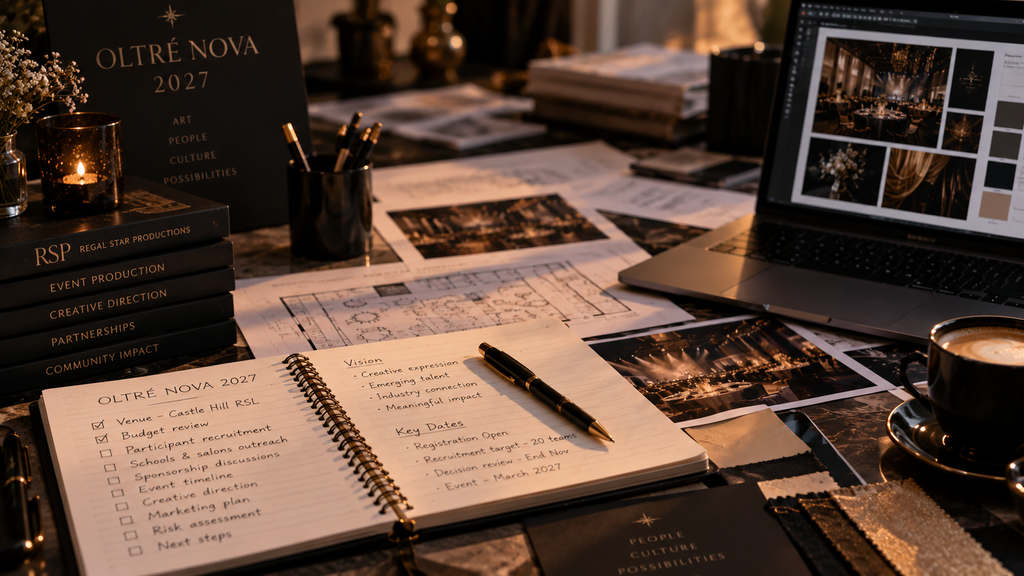
Building OLTRÉ NOVA Differently
This time, I am building quietly.
That doesn’t mean I intend to do everything alone, nor does it mean I have stopped trusting people. I simply want to understand what I am building before deciding who should stand beside me.
In previous experiences, I sometimes brought people into something while I was still trying to understand it myself. Their opinions, expectations and personal interests could then become mixed with my own direction.
With OLTRÉ NOVA, I have been deliberately giving myself more space to build the foundation first. I plan each stage, gather evidence, calculate what I can reasonably carry, create safety nets and observe responses before making the next decision.
When the foundation becomes more solid, I can look for people whose commitment, actions and direction fit what I am building, rather than bringing people in simply because I need support.
There is another difference too: I am moving slowly, but I am still moving.
Fear can sometimes make delay look like responsibility. We can convince ourselves that we are being thorough when underneath all the research we may simply be afraid to commit. That is why I keep deadlines. I give myself room to think and observe, but eventually I have to ask whether something genuinely remains unanswered or whether I am waiting for a level of certainty that does not exist.
How I Know When I Know Enough
I don’t think there is a universal point at which someone has gathered enough information. There is no correct number of articles to read, people to consult or options to compare before a decision becomes ready.
For me, readiness has a particular internal quality that I have learned to recognise. I become calm, although I may still be nervous. The nervousness does not disappear completely, but it no longer feels strong enough to stop me. My vision feels clearer, my chest feels open, my breathing becomes easier and my heart feels happy.
The way I describe it to myself is peace, but brave.
I don’t interpret those sensations as proof that my decision is correct or as a prediction of what will happen. Someone else may experience readiness completely differently. What those sensations tell me is something about my relationship with the decision.
I am no longer fighting myself. I can see that there is risk and still choose to move.
I have realised that I don’t need to feel fearless before I make a decision. I need to feel clear enough to move with the nervousness that remains.
That is very different from certainty.
Not Every New Piece of Information Needs a New Decision
Making a decision doesn’t mean closing myself to whatever happens next. New information may appear tomorrow, and sometimes that information genuinely should change what I do.
What I try not to do now is immediately reopen the entire decision every time something new appears. I acknowledge the information and sometimes park it to the side for a while, watching what is happening before deciding whether it actually changes something important.
Does it expose a risk I didn’t understand before? Has the situation materially changed? Does this information affect one of the foundations on which I made the original decision?
If it does, I can reconsider.
Changing direction because reality has changed is not the same as being indecisive, while repeatedly reopening a decision simply because uncertainty still exists can keep us trapped in an endless cycle.
I want to remain open without allowing every new possibility to pull me away from the direction I have already chosen.
Protecting My Peace Without Hiding From Risk
The purpose of the way I am approaching OLTRÉ NOVA is not to create a risk-free event. I don’t think such a thing exists.
I want to create something meaningful to me, where I can express myself creatively and create a space for other people to express their artistry. Through Regal Star Productions, creating experiences has been part of my life for years, and I still want to put myself out there and create something I believe in.
What has changed is that I no longer want to believe I have to sacrifice myself in order to do it.
Protecting my peace does not mean avoiding risk. It means understanding what risks I am prepared to carry without abandoning myself in the process.
For me, that means being more selective about who I trust, not making decisions simply to please someone or keep their support, and noticing when I am compromising something important because I am afraid of losing a person or opportunity. It also means understanding what I can financially and emotionally carry and creating boundaries before I desperately need them.
A safety net cannot guarantee that I won’t fall. What it can do is help make sure that one fall does not have to take everything with it.
That is the kind of safety I am interested in now.
Maybe You Don’t Need More Information
If you are struggling with a decision, you may genuinely need more information. Research what matters, ask questions, understand the risks, examine the evidence and speak to people who know something you don’t.
But if you have already been doing those things and every new piece of information only creates another question, it may be worth becoming quiet for a moment and asking what you are actually searching for.
Perhaps there is something important you still need to know, but perhaps you are looking for reassurance, trying to guarantee that you will never regret the decision, or attempting to prevent something painful from your past from ever happening again.
Those questions don’t replace research. They help us understand why we are still researching.
If the past keeps appearing, we can look at it. We can observe what happened, notice what we did well and recognise what we would choose differently today. We can learn from the person we were without expecting that person to have known everything we know now.
Then we can come back to the present, because the person standing here today is not exactly the same person who made those decisions before. We may have stronger boundaries now, recognise patterns sooner, ask different questions and understand ourselves differently.
Most importantly, we have another opportunity to decide how we want to respond.
I Am Writing This Before I Know the Ending
I am writing this while OLTRÉ NOVA is still being built through Regal Star Productions. Registration is open, invitations are going out, conversations are still happening and there are important decisions ahead of me.
I don’t know yet how this story will unfold, and that is partly why I wanted to write this now rather than waiting until I already know the ending.
Once we know what happened, it becomes much easier to explain what we should have done, which decisions mattered and which fears turned out to be unnecessary. It is very different to practise clarity while the outcome is still uncertain.
There will be information I don’t have yet, people I haven’t met and problems I cannot anticipate from where I am standing today. I will probably make mistakes too because this is still a continuous learning journey.
My measure of success, however, cannot only be whether everything happens exactly as I planned. There is something else I want to be able to say when I eventually look back at this experience: I put myself out there, created something meaningful to me, allowed myself to take risks again and continued learning without abandoning myself along the way.
I want to arrive at the end still intact and whole.
Perhaps that is what clarity is beginning to mean to me: not reaching a place where uncertainty disappears, but understanding enough about the situation, enough about the risk and enough about myself to take the next step without asking the future to guarantee the outcome.
There is no certainty, but there can still be peace, courage and direction.
And perhaps clarity is trusting myself enough to take the next step without needing to know the ending.
When More Thinking Is No Longer Giving You Clarity
Sometimes the difficulty is not that you haven’t thought enough. You may already have researched the options, considered the consequences and replayed the situation many times, yet still feel unable to move.
This is part of the work I explore through UnEarthly Life Coaching. A Clarity Session creates space to slow down the mental traffic, separate what you know from what you fear, understand what may be influencing the decision and find a direction grounded in both your inner experience and the reality in front of you.
The decision remains yours. The work is about helping you hear yourself more clearly before you make it.